Interview with Hendrik van Aken of Berkhöfel Farm, Part 2
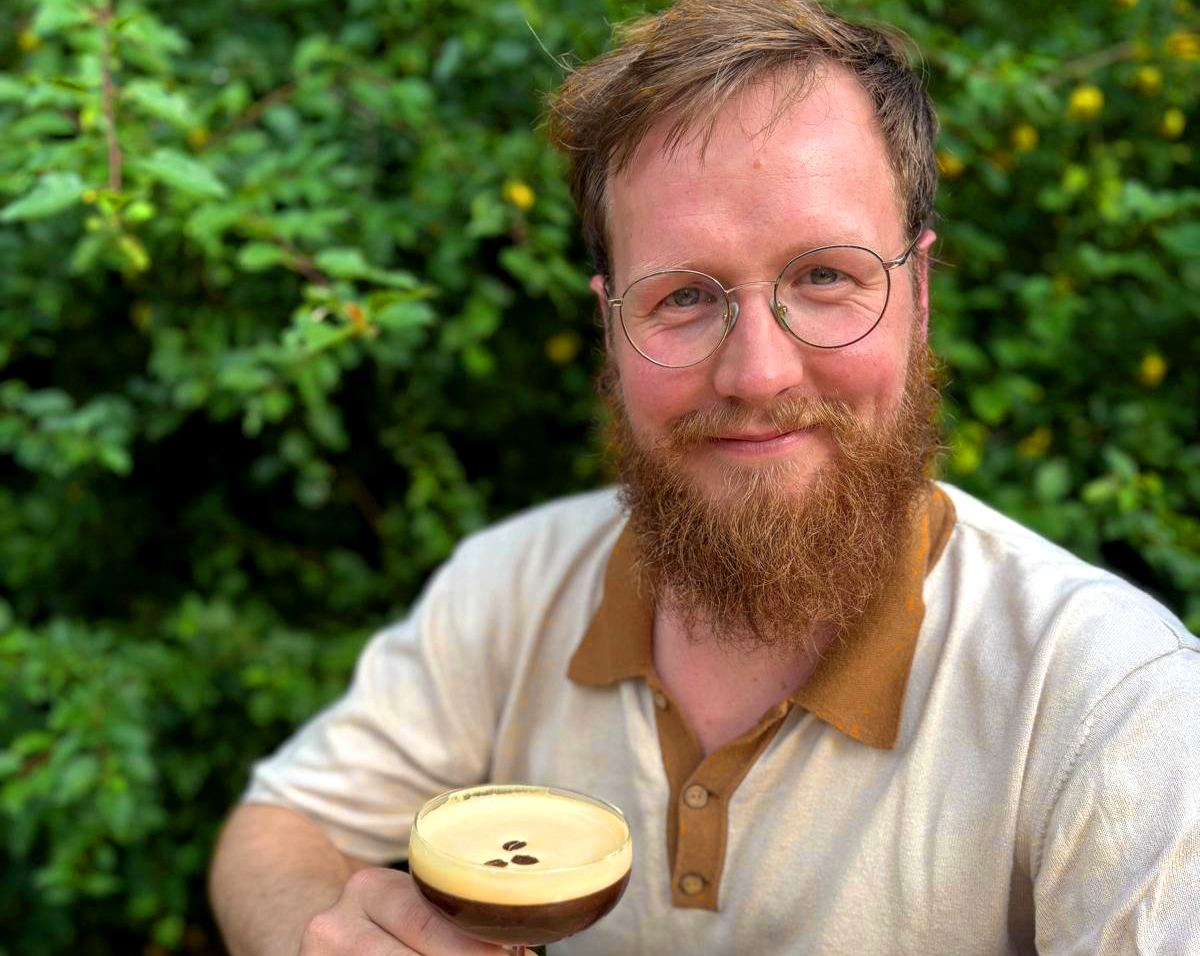
Hendrik van Aken of Hof Berkhöfel
Here is the second part of the interview with Hendrik van Aken from Hof Berkhöfel, or rather the Niederrhein Distillery.
Lars Aspermühle:
And what is the process like when you produce a fruit brandy, for example?
How much raw material is needed to make one liter of brandy—that is, one liter of the finished product?
Hendrik van Aken:
Hold on, I’ll have to do a quick calculation.
Just under ten kilos.
Lars Aspermühle:
That much? That’s quite a bit of raw material.
Hendrik van Aken:
Fruit brandies are extremely inefficient in terms of raw material yield.
Lars Aspermühle:
What are your distribution channels, and how do you find your customers? Who are your customers?
Hendrik van Aken:
Well, we’ve really tried a lot of different approaches.
We had a self-service store here, and we organized a regular weekly market with online pre-orders, the so-called Marktschwärmer. However, none of that really took off the way we had imagined.
Note from Aspermühle:
The Marktschwärmer concept originated in France in 2011 and has since steadily expanded to other European countries.
The concept is based on the idea of direct marketing from the producer to the end customer.
End customers order directly online from the producer on the Marktschwärmer platform, pay in advance, and then pick up the goods at designated distribution points.
This system is also used, for example, by Solawi, as described in the interview with Andreas Münnig.
Marktschwärmer’s approach helps bring food producers closer to consumers again, thereby increasing appreciation for food.
In addition, this naturally leaves more money for the producer.
Since 2025, Marktschwärmer has also been collaborating with CrowdFarming, which is another platform for the direct sale of food.
The Marktschwärmer concept originated in France in 2011 and has since steadily expanded to other European countries.
The concept is based on the idea of direct marketing from the producer to the end customer.
End customers order directly online from the producer on the Marktschwärmer platform, pay in advance, and then pick up the goods at designated distribution points.
This system is also used, for example, by Solawi, as described in the interview with Andreas Münnig.
Marktschwärmer’s approach helps bring food producers closer to consumers again, thereby increasing appreciation for food.
In addition, this naturally leaves more money for the producer.
Since 2025, Marktschwärmer has also been collaborating with CrowdFarming, which is another platform for the direct sale of food.
The following video provides a brief overview of Marktschwärmer.
Hendrik van Aken:
Overall, it was difficult because our focus was always on food production. The demand was simply too low—that was ultimately the central problem. On top of that, people weren’t always willing to pay more for our products than they would in conventional stores. Consequently, we couldn’t sell the quantities we needed to.
So we decided to scale back a bit for now and look for ways to make this sustainable in the long term. A key factor here is the lack of infrastructure for our orchard meadows, which I just mentioned. As a result, the fruit is currently significantly more expensive than it would be with a well-developed infrastructure.
Lars Aspermühle:
Because, of course, you have to drive back and forth, which costs you time and money.
Hendrik van Aken:
Exactly. In its current form, it’s simply too expensive.
That’s why we’re waiting until our orchards have reached the necessary level of development to make this economically viable and attractive to customers at the same time. That’s expected to take another three to four years.
In addition, we’ve considered which areas we can develop more intensively in the meantime, as a sort of driving force. One such area is crop farming, which is becoming increasingly stable and is expected to become self-sustaining. That’s working quite well now.
The distribution channels differ here, however. We specifically focus on collaborating with processing companies. While this is also a form of direct marketing, it is not aimed at end consumers—a sack of grain is simply not practical for most households. Instead, we specifically target processing or value-added businesses, such as bakeries or oil mills. This is working very well.
Lars Aspermühle:
Which, in turn, also find their way into retail.
Hendrik van Aken:
Exactly, these businesses usually have their own marketing structures. Examples include the Kriemhild Mill in Xanten, the Aspermühle, or the Schomaker Bakery.
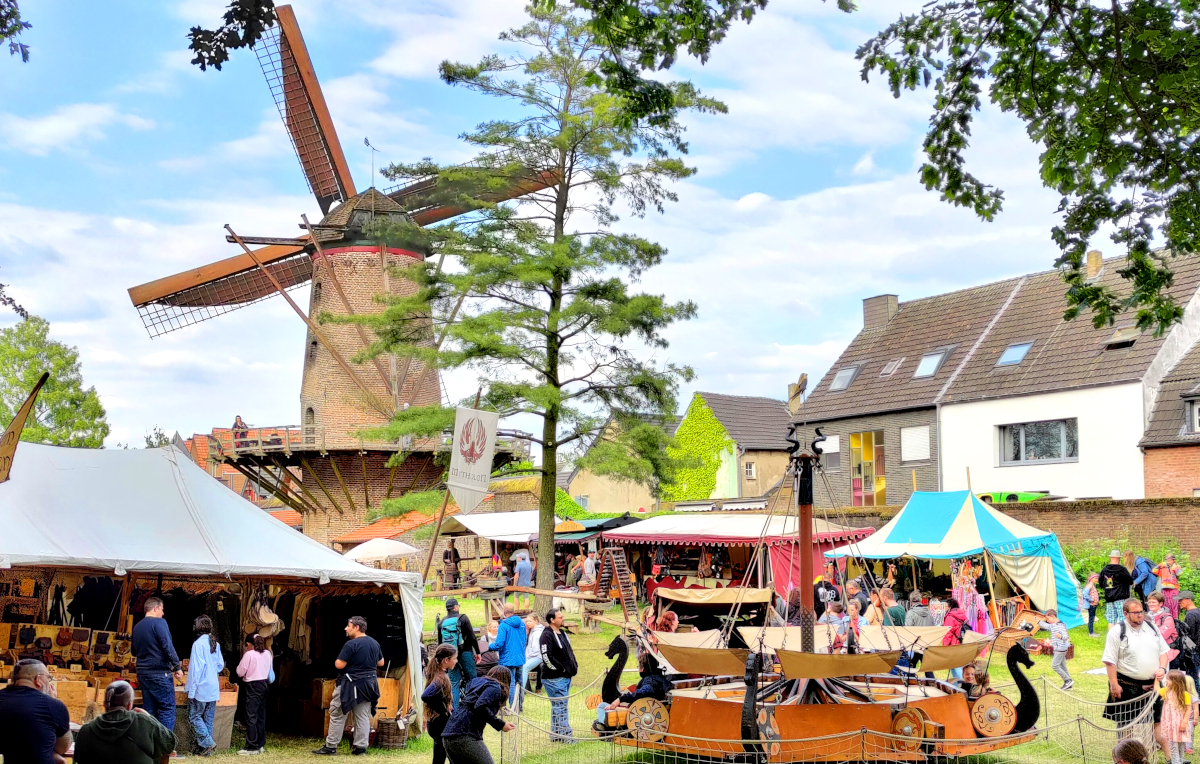
Kriemhild Mill Xanten - Siegfried Spectacle
Lars Aspermühle:
And what does the other distribution channel look like? How do you find buyers in crop farming?
Hendrik van Aken:
Make a lot of phone calls—really, a lot of phone calls. Advertise, don’t be afraid, and approach people directly. You also have to expect that it won’t always work out and that you’ll hit a few snags along the way.
We also target niche markets. For example, we grow flaxseed—no one else in the county does that, and even in the wider area, there are hardly any farms that grow it.
Lars Aspermühle:
To be honest, I’ve never actually come across flaxseed from Germany before.
Hendrik van Aken:
That’s because about 90 percent of the product in this country comes from Kazakhstan.
Lars Aspermühle:
So even if you buy flaxseed at a health food store, it’s usually not from Germany?
Hendrik van Aken:
Exactly. Our product is correspondingly more expensive, and that often raises the question of how that can be despite the short shipping distances. Labor costs are a decisive factor.
Lars Aspermühle:
That’s exactly what I was about to say. On the one hand, there are labor costs, and on the other, there are other expenses—such as fuel—which are also higher than in Kazakhstan, for example.
Hendrik van Aken:
Interestingly, for imported goods, transportation costs account for a significant portion of the total cost, which is of course also problematic from an environmental perspective.
The conditions there are simply different. Many of these countries don’t have a minimum wage as we understand it. I don’t know the labor costs in Kazakhstan, but in Ukraine, for example—which is a strong competitor for our regional agriculture—the monthly wage in agriculture is around 200 euros. With our labor costs of over twelve euros per hour, we simply can’t compete with that. That undercuts prices and is, of course, difficult.
But what I find exciting is that we can still hold our own. There is a certain appreciation among some customers who say: “I don’t care if it costs 20 cents more per kilo—it’s worth it to me.”
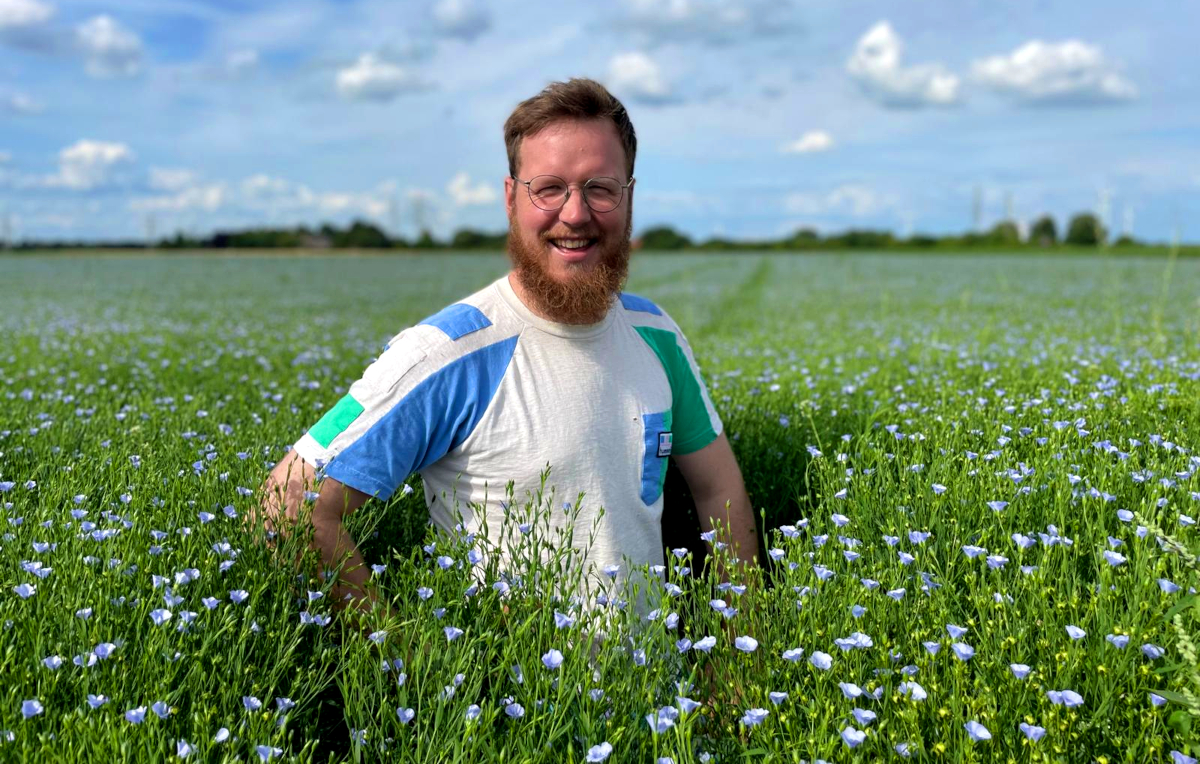
Hendrik van Aken in the flax field
Lars Aspermühle:
Especially since, when calculated over a large quantity, it often isn’t that noticeable.
Hendrik van Aken:
Exactly, for some it hardly makes a difference, for others it does. Ultimately, it’s a matter of priorities. If you’re only looking at the price, you can of course buy large quantities of palletized goods.
This is also reflected in our pricing: If someone buys three bags, that’s different from someone buying two tons. The transport and logistics costs differ significantly.
Lars Aspermühle:
It’s similar for us: A customer who buys two tons is different from an end customer who orders 250 grams in the shop.
The amount of work involved with small units differs significantly. When we fill a product into small units here, it requires much more effort. We fetch the bulk container, have to work in protective gear, decant, label, seal, and then thoroughly clean everything.
With larger units, it’s a lot easier. A pallet is repackaged, and the overall effort is lower.
Hendrik van Aken:
A bulk container is often even easier to handle.
Lars Aspermühle:
Yes, and there’s less cleanup—no mess, less cleaning.
Hendrik van Aken:
It’s the same for us. If I can sell a big bag, I much prefer that to a 25-kilogram sack—purely in terms of the amount of work involved.
Lars Aspermühle:
Yes, exactly. That’s how it is.
Hendrik van Aken:
In other areas, we’ve scaled back quite a bit in the meantime.
We still run our small farm shop here, where we mainly offer apple juice, apple syrup, and apple cider from our own farm. The rest of our focus is now on spirits.
For these products—both the spirits and the farm shop items—we developed a new marketing strategy last year: events. This means we host monthly public events here that interested parties can sign up for. In addition, we have an event space that private groups, including staff, can book. The events are a mix of culinary and educational activities.
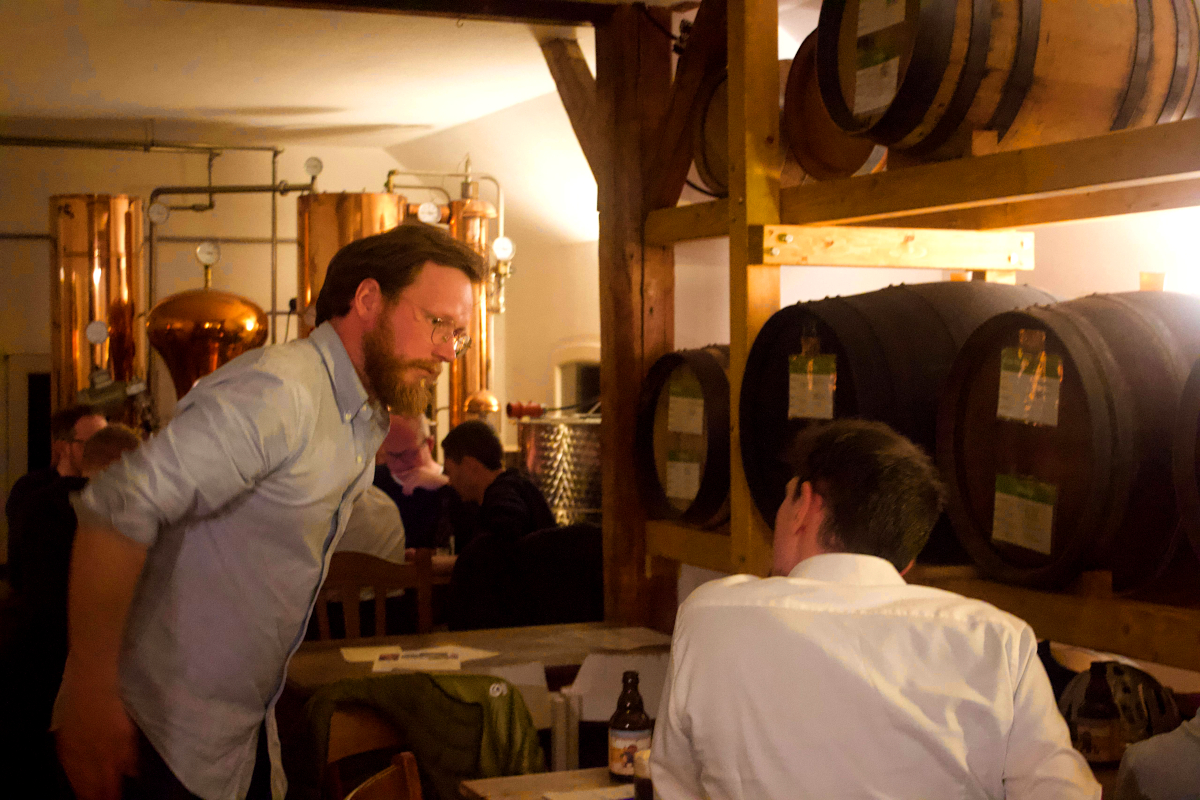
Event at the Niederrhein Distillery
Lars Aspermühle:
So you’re sharing knowledge about the products while also selling them?
Hendrik van Aken:
Exactly. And it works wonderfully. People sit here for about three hours, enjoy tasting the different products, and learn more about the background.
If we manage to get them excited during that time, many of them end up buying something afterward—especially the products they really enjoyed. That’s also the big advantage: you’re not buying a pig in a poke. The products are tasted beforehand, so you know exactly what you’re buying. No one wants to spend a lot of money on a high-quality spirit only to realize at home that it doesn’t suit their taste at all.
This really works very well, and that’s where we’ve focused our efforts in the meantime.
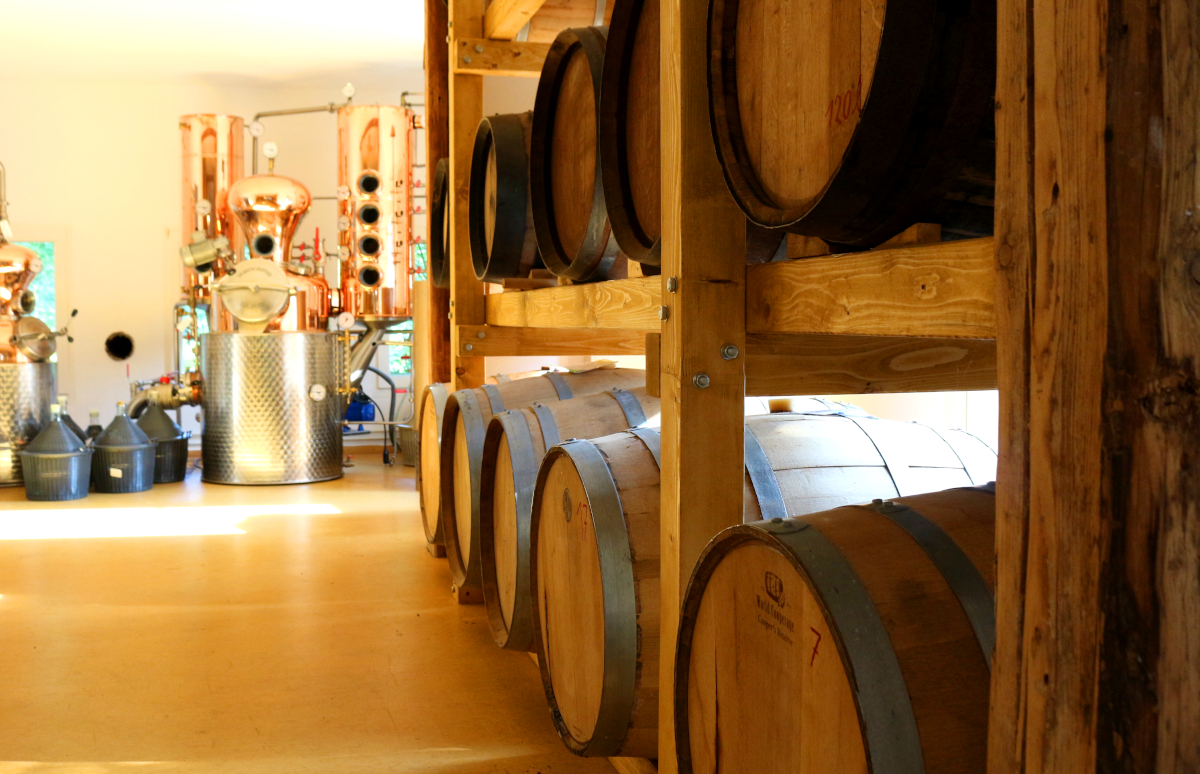
Distillery and whiskey barrels
Lars Aspermühle:
Very good.
And word is getting around. Once you’ve attended an event like this and enjoyed it, you naturally tell others about it.
Hendrik van Aken:
Yes, exactly—that actually works very well.
Lars Aspermühle:
That’s great, that’s a good idea.
Hendrik van Aken:
Otherwise, farmers’ markets are another, still relatively new sales channel for us.
Lars Aspermühle:
I’ve already seen your products at the organic grocery store in Kleve.
Hendrik van Aken:
Yes, but more sporadically, not on a permanent basis.
Basically, I really enjoy working with organic grocery stores. However, sales there aren’t particularly high for us—partly because we haven’t invested enough energy in that area. Going forward, we plan to expand that again, meaning both the production and marketing of food products.
In that sense, it’s understandable that the focus in organic grocery stores isn’t currently as strong on our products—after all, our own focus is also less intense at the moment. That will change again in the future.
Lars Aspermühle:
But that’s also difficult, because organic grocery stores add additional markups.
Hendrik van Aken:
Yes, that applies not only to organic grocery stores but to the food retail sector in general—margins there are typically set at around 25 to 35 percent.
Lars Aspermühle:
Exactly. We tried that once with various organic grocery stores, but it didn’t work out so well, since we sell very high-quality products, and especially the smaller packages typically sold in organic grocery stores end up having a fairly high base price. So, naturally, our prices are lower in our direct online sales.
Hendrik van Aken:
That’s why we’re currently focusing primarily on direct marketing. That’s what’s most interesting for us right now and also the most transparent for our customers. Once we’ve grown further in the future, we’ll also reach out more to the food retail sector again.
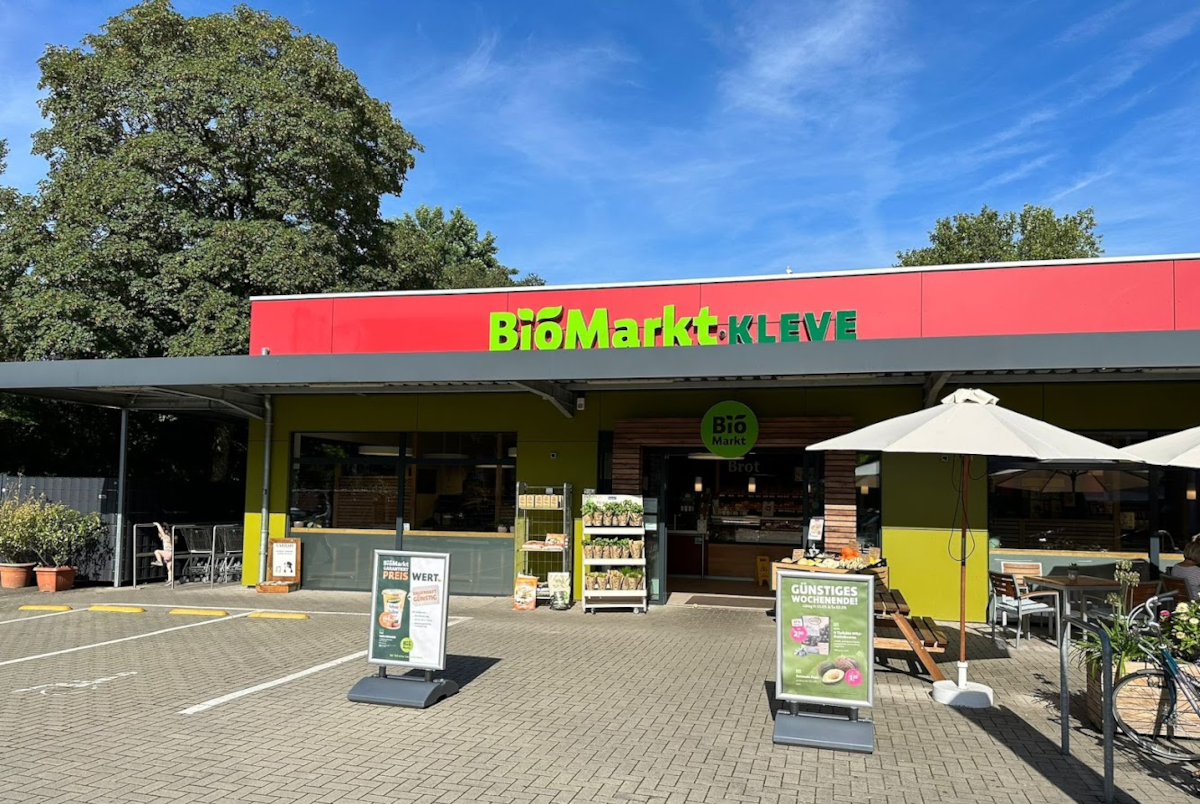
Organic Grocery Store Kleve
Lars Aspermühle:
So, you’re mainly focusing on shelf-stable products right now, if you will?
Hendrik van Aken:
When it comes to spirits?
Lars Aspermühle:
Yes, definitely when it comes to spirits.
Hendrik van Aken:
Although we make a conscious distinction there. For us, these aren’t traditional foods, but luxury foods. This distinction is actually important to us.
Lars Aspermühle:
Okay.
Hendrik van Aken:
With food, the price simply plays a major role. That’s just a fact—even if it can be a bit different for certain customer groups, and sometimes even for us. But overall, the focus there is less on quality alone and more on price, and high-quality products tend to remain a niche.
With luxury goods, it’s exactly the opposite. That’s why we also decided on spirits. People tend to buy luxury goods only occasionally, and then quality takes center stage—price is less of a deciding factor.
Lars Aspermühle:
Yes, I understand.
Hendrik van Aken:
That’s why we made a conscious decision: We’re going to focus on luxury food production for a few years to drive food production forward, help build it up, and let the structures grow.
Lars Aspermühle:
Good idea.
Hendrik van Aken:
Our goal is to eventually re-enter the regional food supply chain more strongly, and to do so at prices that are affordable for people. Because ideally, food should be affordable—especially when it comes to staple foods.
Lars Aspermühle:
Exactly.
Hendrik van Aken:
At our core, we produce many staple foods. If these are too expensive, many people can no longer afford them—and then, ultimately, you miss your own target audience, namely the general public.
Lars Aspermühle:
Yes, exactly. And generally speaking, the products you produce also tend to have a longer shelf life. Grains and oilseeds store well, whereas fresh vegetables or fruit are much more difficult to store.
Hendrik van Aken:
Exactly. Products like apple juice or apple syrup store well and can be sold year-round.
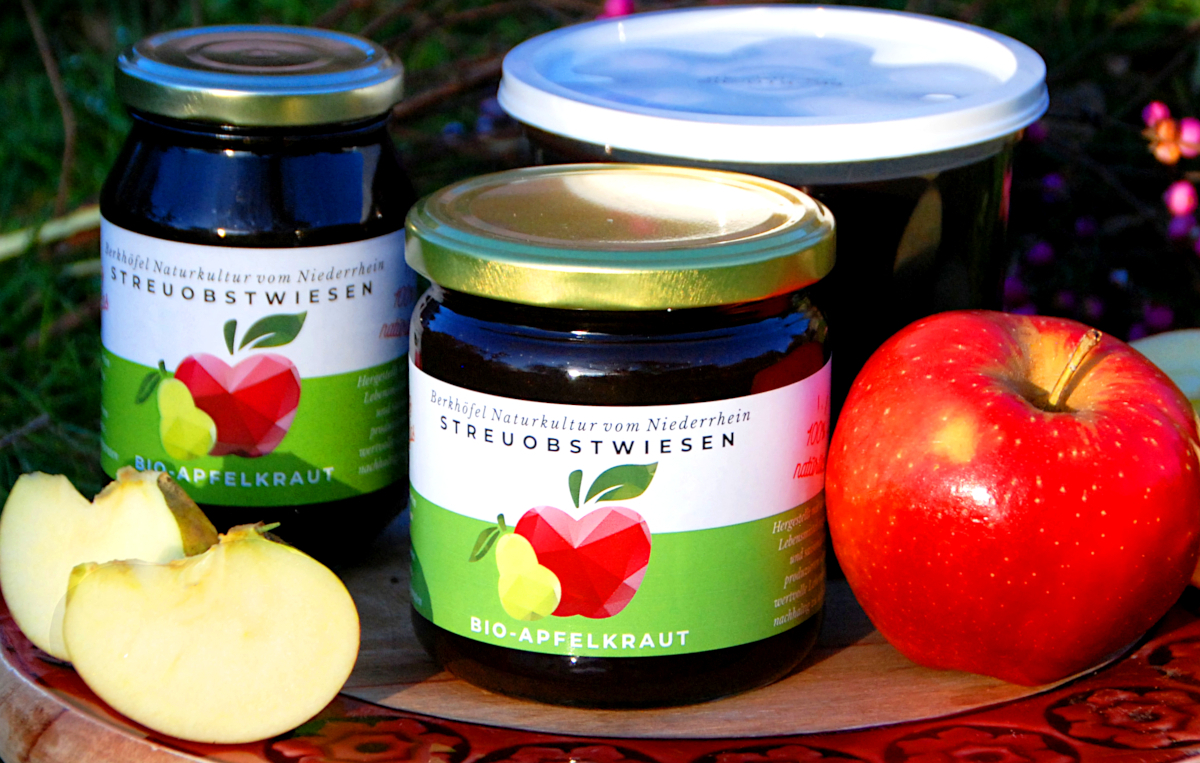
Apfelkraut Niederrhein Distillery
Lars Aspermühle:
Yes.
Hendrik van Aken:
In the long term, however, we also want to get more involved in the fresh fruit sector again. At the moment, though, that’s still a pipe dream.
Lars Aspermühle:
Yes, that’s difficult. What do you do with the quinces? You mentioned quinces earlier.
Hendrik van Aken:
Quince brandy.
Lars Aspermühle:
So mainly for the distillery?
Hendrik van Aken:
Exactly. We also make quince juice occasionally, but the focus is clearly on the brandy.
Lars Aspermühle:
We also have a quince tree in the garden, and it was absolutely loaded with fruit this year.
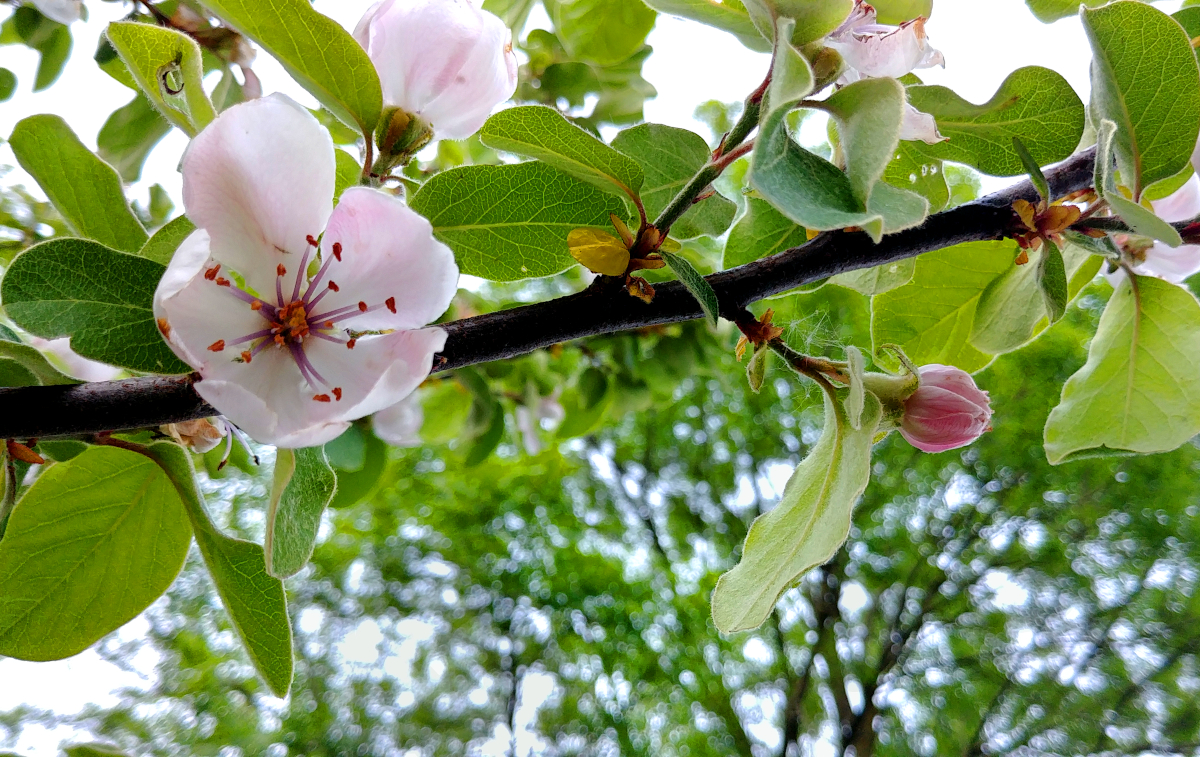
Quince blossoms
Hendrik van Aken:
If you have too many, feel free to bring them over.
Lars Aspermühle:
Oh, no, we’ve already used them all up.
I’m also using the recipes right away for the blog on our website.
We made a ton of stuff—first, of course, a regular quince compote, then we made quince bread. It’s really delicious.
Then a quince chutney and jelly made from quinces, and of course syrup.
I was so happy because I had pruned the tree again after it bloomed—it was way too full, and the branches would have just snapped off otherwise.
And yet we still ended up with two tubs full of quinces.
That was really nice.
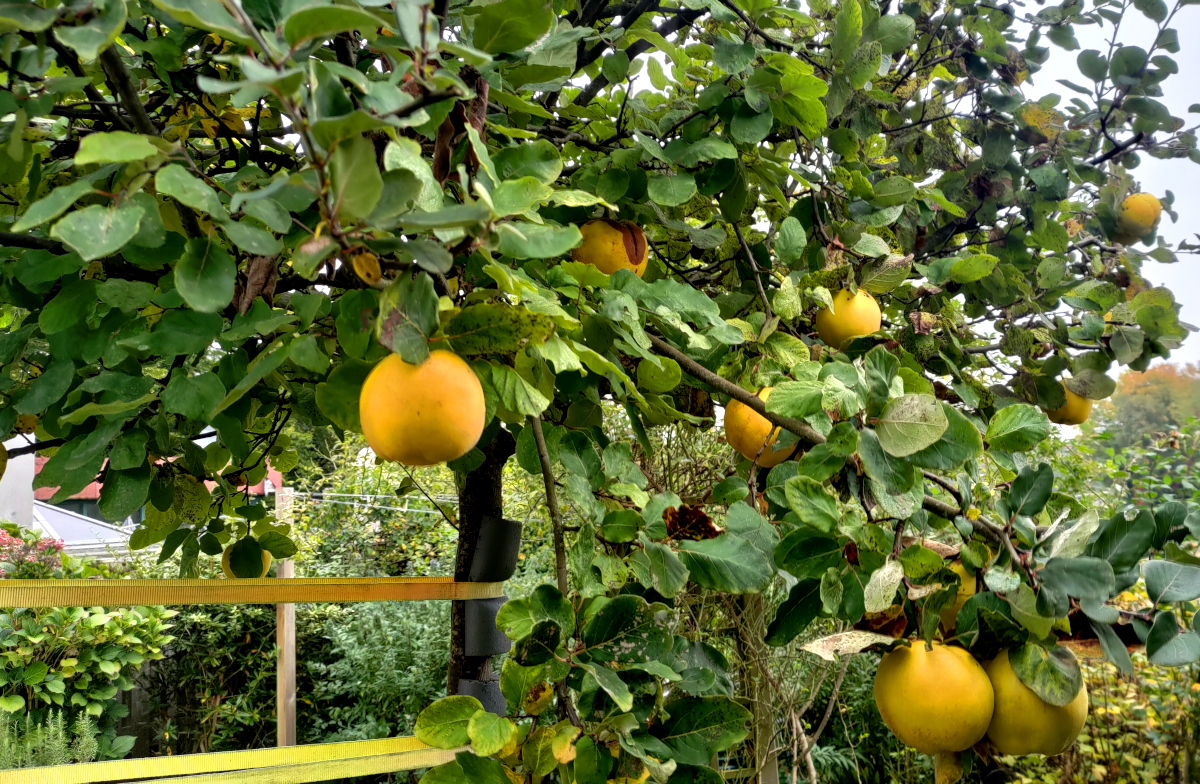
Quinces on the tree
Lars Aspermühle:
Something else I’m curious about: I saw some malt near your barrels earlier.
Do you make that yourselves, or are those base products you buy in?
Hendrik van Aken:
The question is more about how much time you have.
We could do an entire interview just on malt—no joke, we could easily talk about it for two and a half hours.
Lars Aspermühle:
I have time.
Ultimately, for me, it comes down to this: What fits, what do I find exciting. And if I find something interesting, then I use it. So far, that’s worked out very well.
Hendrik van Aken:
Malt is extremely relevant to us—both in distillate production and for the regional brewing industry. Every beer contains malt, and it also plays a central role in traditionally produced whiskey. If you want to produce alcohol from grain in the traditional way—for example, grain schnapps here in our region—a certain amount of malt is also necessary.
The fundamental question is, first of all: What is malt anyway? Very few people know that.
Malt is basically nothing more than germinated grain. When it comes to making alcohol, we need sugar and yeast. The yeast then initiates a fermentation process in which it metabolizes the sugar and produces alcohol in the process.
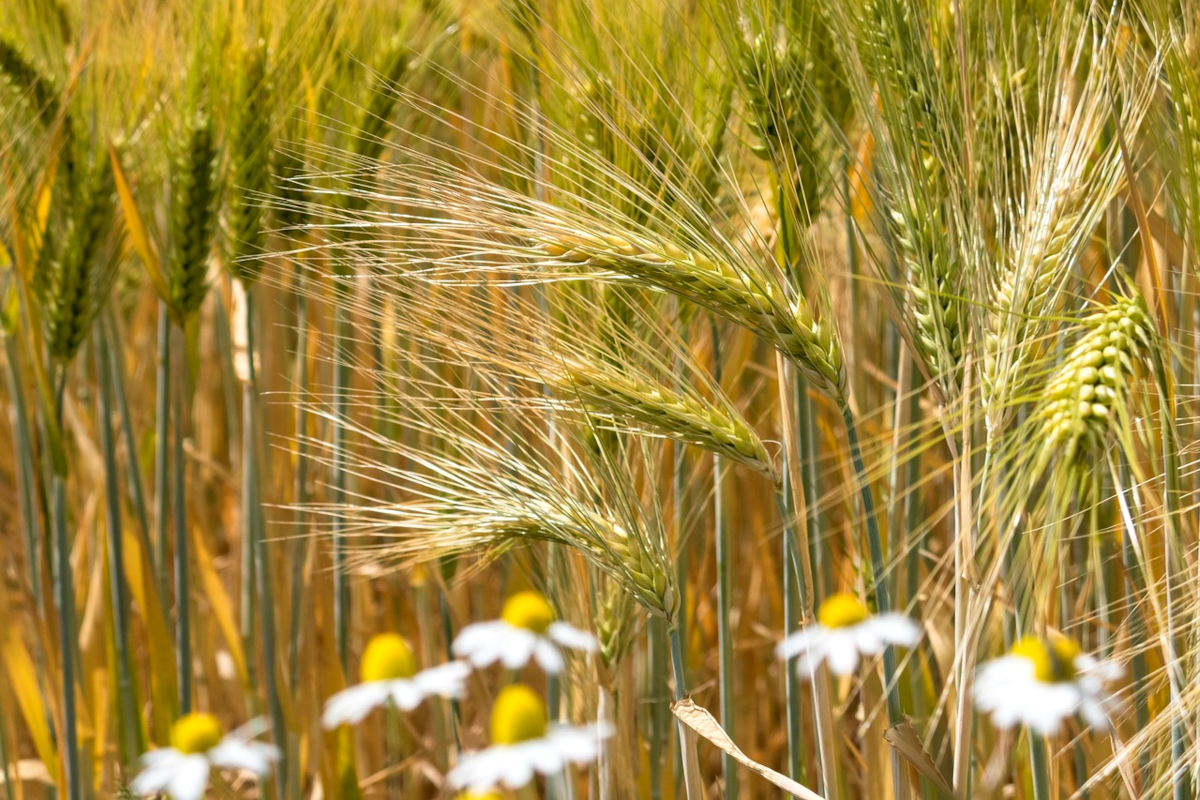
Barley field with chamomile
Lars Aspermühle:
And ideally one that doesn’t kill you. :)
Hendrik van Aken:
Exactly. With fruit, it’s relatively simple. You take the fruit, chop it up, add yeast, and it starts fermenting on its own.
With grains, it doesn’t work that way because they mainly contain starch.
Lars Aspermühle:
It’s too hard to break down.
Hendrik van Aken:
Exactly. At first, the yeast can’t do anything with starch.
Yet starch is basically a form of sugar, too.
Lars Aspermühle:
A carbohydrate.
Hendrik van Aken:
Exactly, a carbohydrate. This starch must first be converted by various enzymes into a form that yeast can utilize—for example, into maltose. Maltose can be metabolized very well by yeast.
This process actually takes place quite naturally in the plant when it germinates. So when a grain of cereal fulfills its original function—namely, reproduction— that is, when it comes into contact with water in the soil, swells, and begins to germinate, enzymes are released that are capable of converting the starch into maltose
This natural process is simulated in malting technology. Grain is taken, water is added to induce germination, and it is then placed in a so-called floor malting facility. In the past, this was done on threshing floors —that is, barn floors—but today it usually takes place on concrete surfaces.
There, the grain is spread out in layers about ten to seventeen centimeters thick and kept at a temperature of approximately 17 degrees. It is turned regularly to ensure the germination process proceeds evenly. It then germinates; the starch and protein it contains are converted, and after about five to six days, this process is complete.
Afterward, the whole batch must be dried again, because a lot of water is absorbed during germination—up to about 40 percent moisture. However, to ensure good shelf life, the grain must be brought back down to about 10 to 13 percent moisture content. For malt, this value is usually as low as eight to ten percent.
The malting process is demonstrated again in the following video.
Lars Aspermühle:
Yes, that’s the case with our products as well—we’re always around eight percent, which works out quite well.
Hendrik van Aken:
Eight percent is great, that’s excellent.
But that also means that after the grain has germinated, it has to be dried down again.
The individual steps in the process are highly centralized today. There are hardly any malting plants left in this region. I often ask that question at our events, too.
Where is the nearest malting plant?
Lars Aspermühle:
Münster :)
Hendrik van Aken:
There is one in Münster, yes. There’s also one in Düsseldorf and one in the Netherlands, in Winterswijk.
The problem is, though, that the large malting plants don’t offer contract processing. If I go there and say, “I have two tons of grain here; please make malt out of it,” they’ll say, “Come back when you have 200 tons.”
Lars Aspermühle:
Most likely it’s not worth it because the facilities are so large and the cleaning process is so labor-intensive.
Hendrik van Aken:
Exactly. They work with batches of about 120 tons per run. You can’t really fit two tons into that.
But it was always clear to us that if our name is on a product, it should also contain our own raw materials. Customers should be able to rely on that.
And that’s exactly where the problem lies when it comes to whiskey. There’s no malting plant here that works for us.
That’s why the Niederrhein Distillery—which has been around for about 18 years and which we took over about four years ago—used to buy in grain. On the one hand, because it wasn’t a farm, and on the other, because there was no operation in the region that produced its own malt.
When we took over the distillery, this naturally became a central issue right away. Our goal was clear: 100 percent of our raw materials should come from the region or from our own farm.
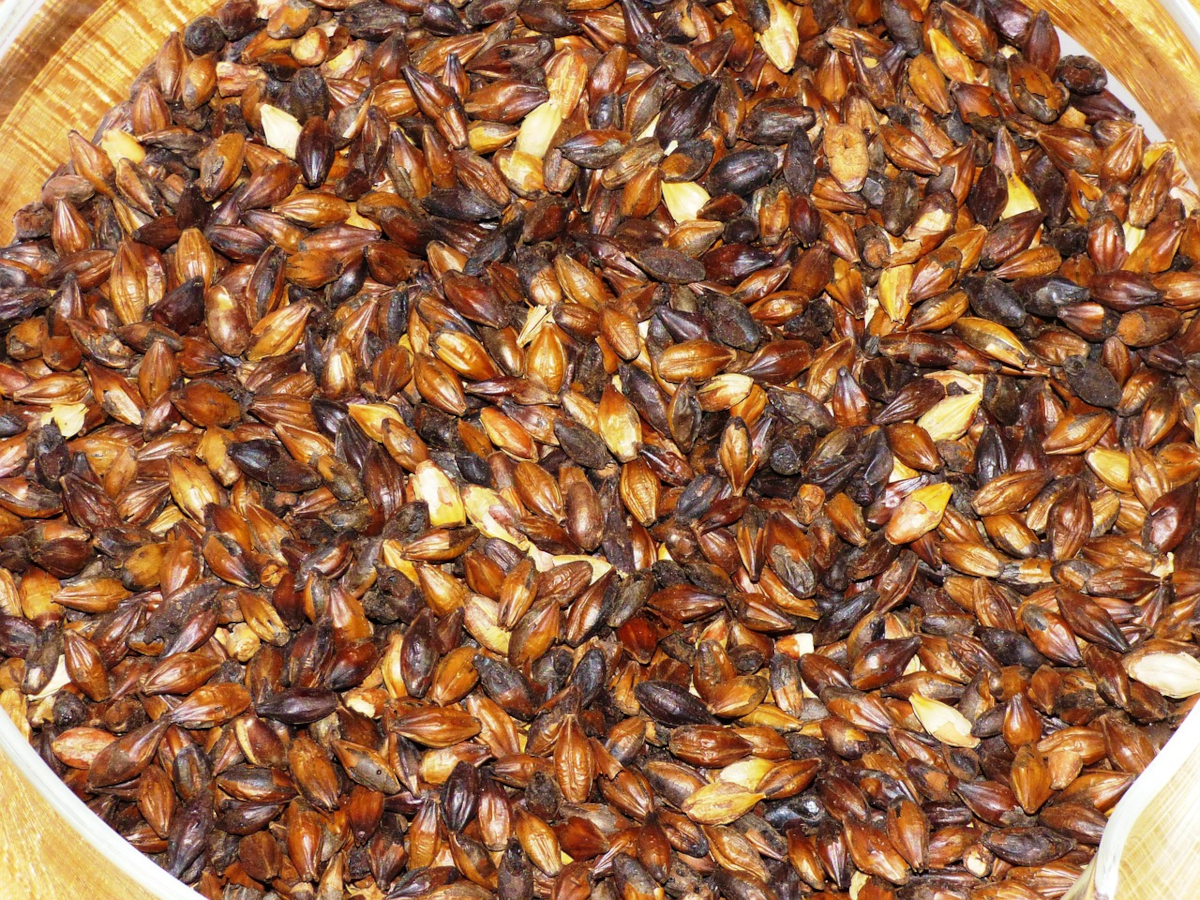
Barley malt
Lars Aspermühle:
Very good.
Hendrik van Aken:
With fruit, that was relatively easy to implement. We’re now almost at the point where we hardly need any external raw materials.
With whiskey, on the other hand, it’s much more difficult because there simply wasn’t anyone who could handle the malting for us. We’ve since found a facility in the Netherlands that does it occasionally—but that’s not reliable and is more of a stopgap solution.
In the long term, we need to be able to handle this ourselves. That’s why we’re planning to renovate a suitable building—ideally as early as next year. We’re currently still waiting for funding approval from the BLE(Federal Office for Agriculture and Food). This is part of a larger funding project that we’ve launched together with four breweries, two bakeries, and many dedicated partners, as well as the Wesel district.
Lars Aspermühle:
Okay, what exactly is the scope of this?
Hendrik van Aken:
The goal is to strengthen regional value chains—especially in the baking and brewing industries. The goal is to bring grain processing back to the region in a more significant way.
Specifically, this means that farmers here locally should have the opportunity to process their grain—that is, to clean and bag it. That is a key point. As part of the project, we are responsible for the cleaning and bagging processes, as well as for the malting technology. If everything is approved as planned, this is where it will be installed.
Lars Aspermühle:
Very good.
Hendrik van Aken:
Another project is already in the works. An additional grant application to bring a mill back to the region. Because when we process grain for bakeries, they naturally need flour in the end, especially whole-grain flour.
Currently, there are basically two bakeries here in the region that consistently use whole grain—the Kriemhild Mill and the Schomacker Bakery. That’s also one of the reasons why we’re working with them.
Lars Aspermühle:
In my opinion, they also bake the best bread here in the area. Those are the two that immediately come to mind.
Hendrik van Aken:
There’s another bakery a bit further away—“Der konsequente Bäcker.” They’re based near Venlo in the Netherlands and have several branches there—I think about ten. One or two of them are also in Germany. They make very good products as well.
At the organic grocery store in Kleve, for example, about half of the baked goods come from Schomacker, and the other half from Der konsequente Bäcker. Both are really very good.
Lars Aspermühle:
I usually go to the organic grocery store myself because Kriemhild-Mühle mainly sells at the market—and I’d have to go there in the morning, which is often difficult for me time-wise.
Lars Aspermühle:
Back to the topic of malt
Hendrik van Aken:
Exactly, malt is a central theme for us.
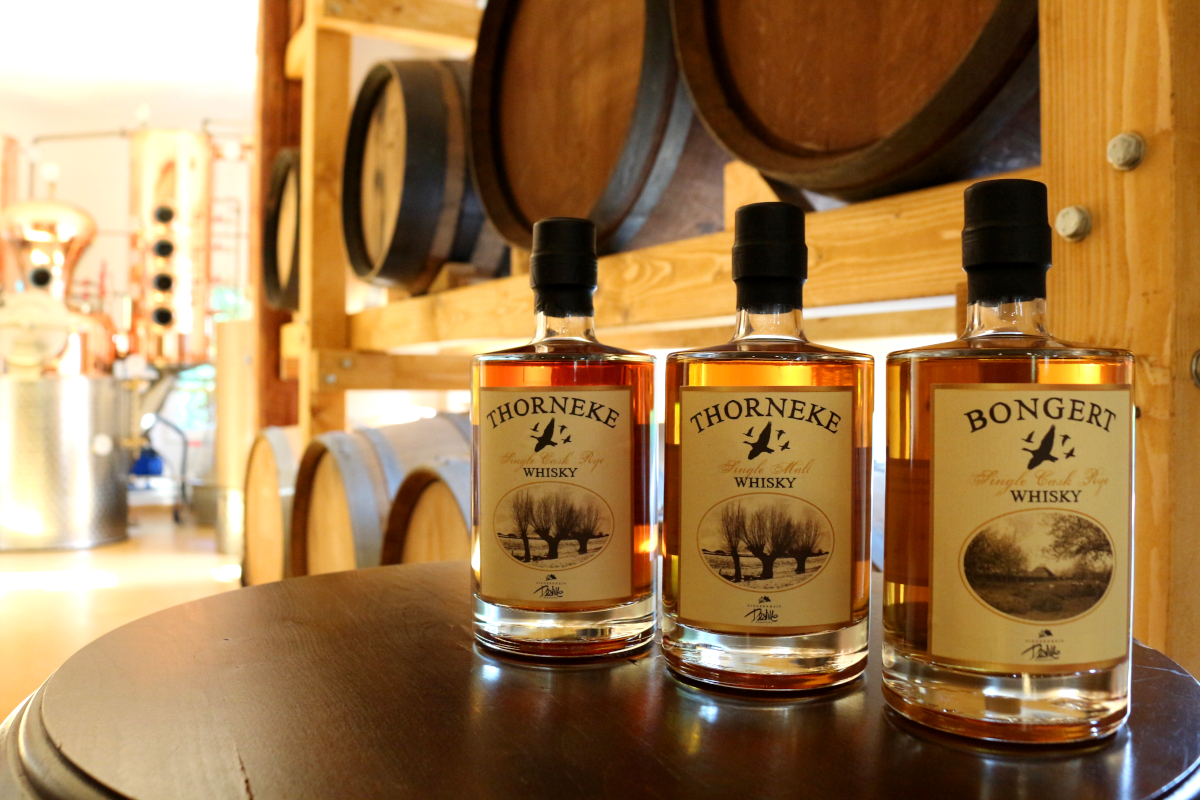
Whiskey Niederrhein Distillery
We produced the first batches last year—about 600 liters of whiskey. It’s now 100 percent from the Lower Rhine: that’s our own rye, processed—or rather, malted—right here in Winterswijk, which you can still count as part of the Lower Rhine, and then distilled at our facility. Now it’s in the barrel, aging.
Lars Aspermühle:
Perfect, sounds good. How long does it need to mature?
Hendrik van Aken:
That will take about six more years.
The whiskey we’re currently selling still comes from the previous owners. It was produced back then and put into barrels. Of course, I can’t change the raw materials now that it’s already been done.
Lars Aspermühle:
It’s still a good product, though.
Hendrik van Aken:
Absolutely, it’s very high quality. It represents the region’s artisanal tradition, supports our business, and everything we’re currently building.
And everything we’re producing now is based entirely on our own grain.
Finally, here’s a video from the SWR Handwerkskunst series: How to Distill Whiskey